


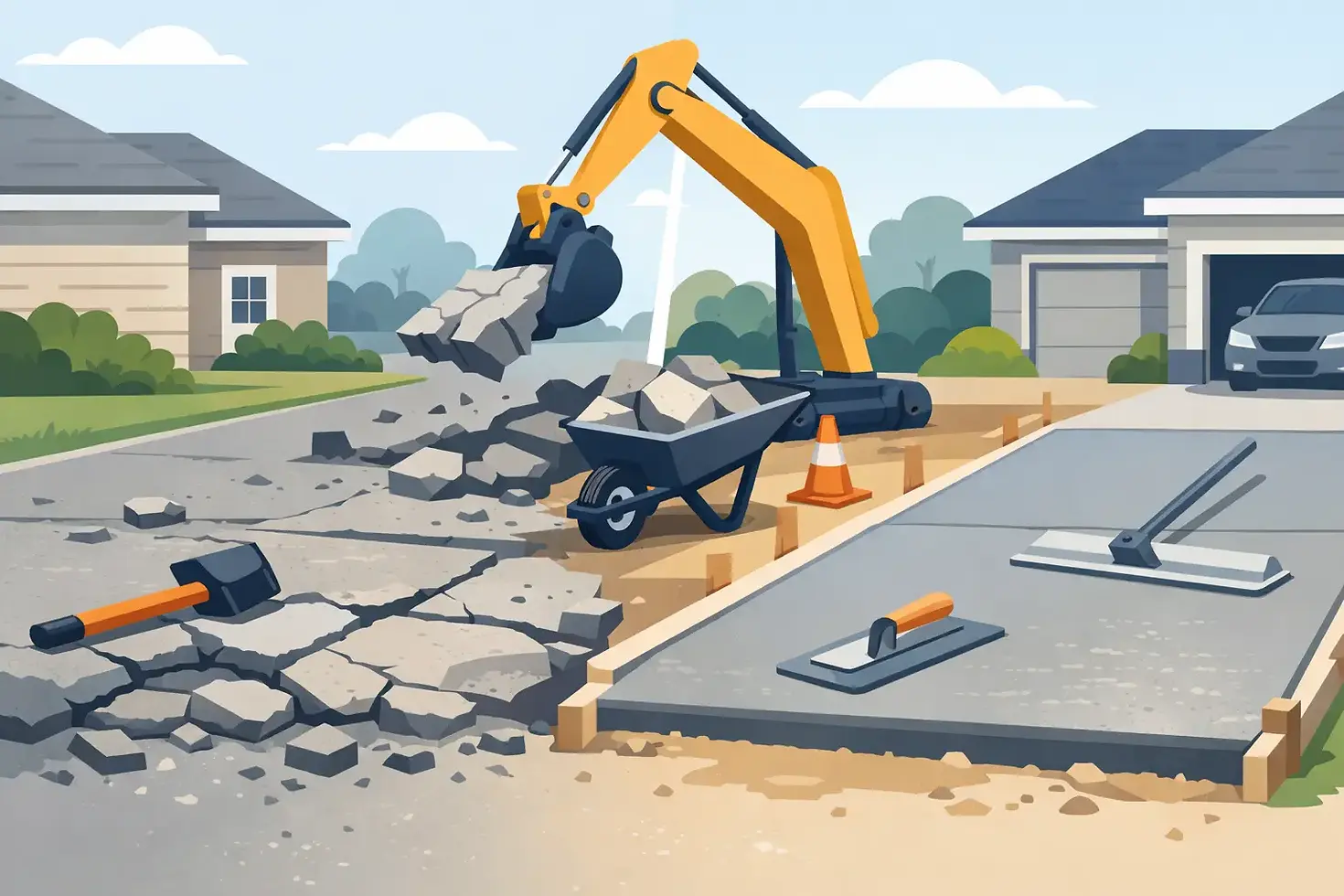
When Should Driveway Concrete Be Replaced?
- uptopcontracts
- Apr 5
- 6 min read
A driveway usually tells you it is failing long before it fully gives out. The problem is that many property owners wait too long because the surface still looks usable from the street. If you are asking when should driveway concrete be replaced, the real answer is not based on age alone. It comes down to structural movement, drainage, surface wear, and whether repairs would only delay a bigger problem.
In our line of work, this comes up all the time. Some driveways need full replacement sooner than expected because of poor base preparation or heavy vehicle traffic. Others can stay serviceable for years with isolated repairs. The key is knowing which signs point to cosmetic wear and which ones mean the slab is no longer doing its job safely.
When should driveway concrete be replaced instead of repaired?
Replacement makes more sense when the slab has stopped performing as a solid, stable surface. A few hairline cracks do not automatically mean you need a new driveway. Concrete cracks. That is normal. What matters is the type of cracking, how widespread it is, and whether the slab is shifting, sinking, or breaking apart.
If one area has a small crack but the concrete is still level and draining properly, repair may be reasonable. If multiple sections are settling, water is pooling near the garage, or the surface is scaling badly after winter, patching often becomes money spent on a short-term fix.
A good contractor should be honest about that. It is easy to sell a low-cost repair when a customer wants the cheapest option. It is harder, and more responsible, to explain when that repair will not last.
The clearest signs your driveway concrete is ready for replacement
The concrete is sinking or uneven
Settlement is one of the biggest red flags. If sections of the driveway have dropped and created trip hazards, pooling water, or a lip near the garage or sidewalk, the problem usually goes deeper than the surface.
This often points to a weak or washed-out base under the slab. In freeze-thaw climates, that movement tends to get worse over time. You can grind small height differences in limited cases, but widespread settlement usually means the slab should be removed and rebuilt on a proper base.
Cracks are wide, spreading, or running through multiple slabs
Not all cracks are equal. Thin shrinkage cracks can be mostly cosmetic. Wider cracks, cracks with vertical displacement, or patterns that run across several sections suggest structural failure.
If the cracks keep reopening after repairs, that is another sign replacement is the smarter investment. Filling them may improve appearance for a while, but it does not stop slab movement underneath.
The surface is flaking, chipping, or scaling badly
Surface damage is common in older driveways, especially where de-icing salts and winter moisture have taken a toll. Light surface wear can sometimes be lived with. Severe scaling is different. Once the top layer starts breaking down across large areas, the driveway becomes harder to clean, less attractive, and more vulnerable to further damage.
If the concrete is losing its top surface in many areas, resurfacing may not bond well or last long. At that point, replacement is often the more dependable route.
Water is draining the wrong way
A driveway should move water away from the garage, foundation, and pedestrian areas. When it no longer does that, it becomes more than a cosmetic issue.
Poor slope can lead to icing, standing water, faster concrete deterioration, and even water intrusion near the home. If drainage problems come from slab settlement or poor original installation, replacement is often the only real fix. Patching low spots rarely solves the full issue for long.
Large sections are broken or crumbling at edges
Driveway edges take abuse. Tires roll over them, snow gets piled there, and unsupported sides are more likely to crack. Minor edge damage can sometimes be repaired, but when corners are breaking away repeatedly or several sections are crumbling, the slab has likely reached the end of its useful life.
This matters even more on shared access areas, rental properties, or commercial sites where trip hazards and liability need to be taken seriously.
Age matters, but not as much as condition
People often want a simple number. The truth is that a concrete driveway might last 25 to 40 years, but that range depends heavily on installation quality, base compaction, drainage, traffic load, maintenance, and climate.
A 15-year-old driveway that was poured too thin over poor subgrade may already be failing badly. A 30-year-old driveway with sound structure and minor cracking may still have years left. That is why replacement decisions should be based on current performance, not just the calendar.
In areas with repeated freeze-thaw cycles, driveways go through more stress than many homeowners realize. Water gets into cracks, freezes, expands, and slowly opens the slab further. That cycle is hard on both the concrete and the base below it.
When repair is still worth doing
A full replacement is not always necessary. If the driveway has isolated hairline cracks, a small chipped section, or minor joint deterioration, repair may buy useful time at a sensible cost.
This is especially true when the slab is still level, the surface is mostly intact, and drainage is working properly. Sealing joints, filling select cracks, or addressing a limited damaged area can help maintain appearance and slow deterioration.
But repairs make the most sense when expectations are realistic. They are usually maintenance, not a reset button. If a contractor promises an old, shifting driveway will look and perform like new after a basic patch job, that should raise questions.
What replacement solves that patching cannot
Replacement gives you the chance to correct the underlying causes of failure. That may include rebuilding the base, adjusting slope, improving thickness, reinforcing where needed, and creating proper control joints.
It also allows you to improve function. Some property owners widen the driveway, rework the apron, add a walkway connection, or fix awkward grading near steps and garage entries. If the existing slab has several problems at once, replacement is often the more cost-effective decision over the long run because it addresses the whole system instead of chasing one symptom at a time.
For homes and commercial properties alike, there is also the curb appeal factor. A badly cracked or sunken driveway affects how the entire frontage looks. That may not be the main reason to replace it, but it often becomes part of the decision.
Cost is important, but so is timing
Many owners delay replacement because the driveway is still technically usable. That is understandable. Concrete work is a real investment.
Still, waiting too long can make the project more expensive. Continued settlement can affect adjacent walkways, garage thresholds, curbs, and drainage patterns. Surface failure can spread. Safety concerns can become harder to ignore.
There is also a practical timing issue. Replacing a driveway before complete failure usually gives you more control over scheduling, budget, and design choices. Waiting until it becomes an urgent hazard often means making faster decisions under more pressure.
How to evaluate your driveway honestly
Start with a simple walkaround after rain or after snow melt. Look for standing water, uneven sections, widening cracks, spalling, and broken edges. Check whether the slab is pulling away from the garage or steps. Notice whether repairs from previous years are holding or failing again.
Then ask a straightforward question: is the driveway basically sound with a few defects, or is it steadily breaking down in several ways at once? That distinction matters.
A trustworthy estimate should explain not just the price, but why repair or replacement is being recommended. If you are getting vague answers, it is worth slowing down. Experienced contractors should be able to point to the specific signs of failure and explain what can realistically be fixed.
At UptopContractor, that practical approach matters because concrete is not a product you want sold with guesswork or inflated promises. You want a clear assessment of what is happening now and what is likely to happen next.
If your driveway has one issue, repair may be enough. If it has movement, drainage problems, widespread cracking, and surface breakdown, replacement is usually the safer and smarter call. The best time to act is not when the slab is completely destroyed. It is when the warning signs are clear enough that spending more money on temporary fixes no longer makes sense.

Comments