
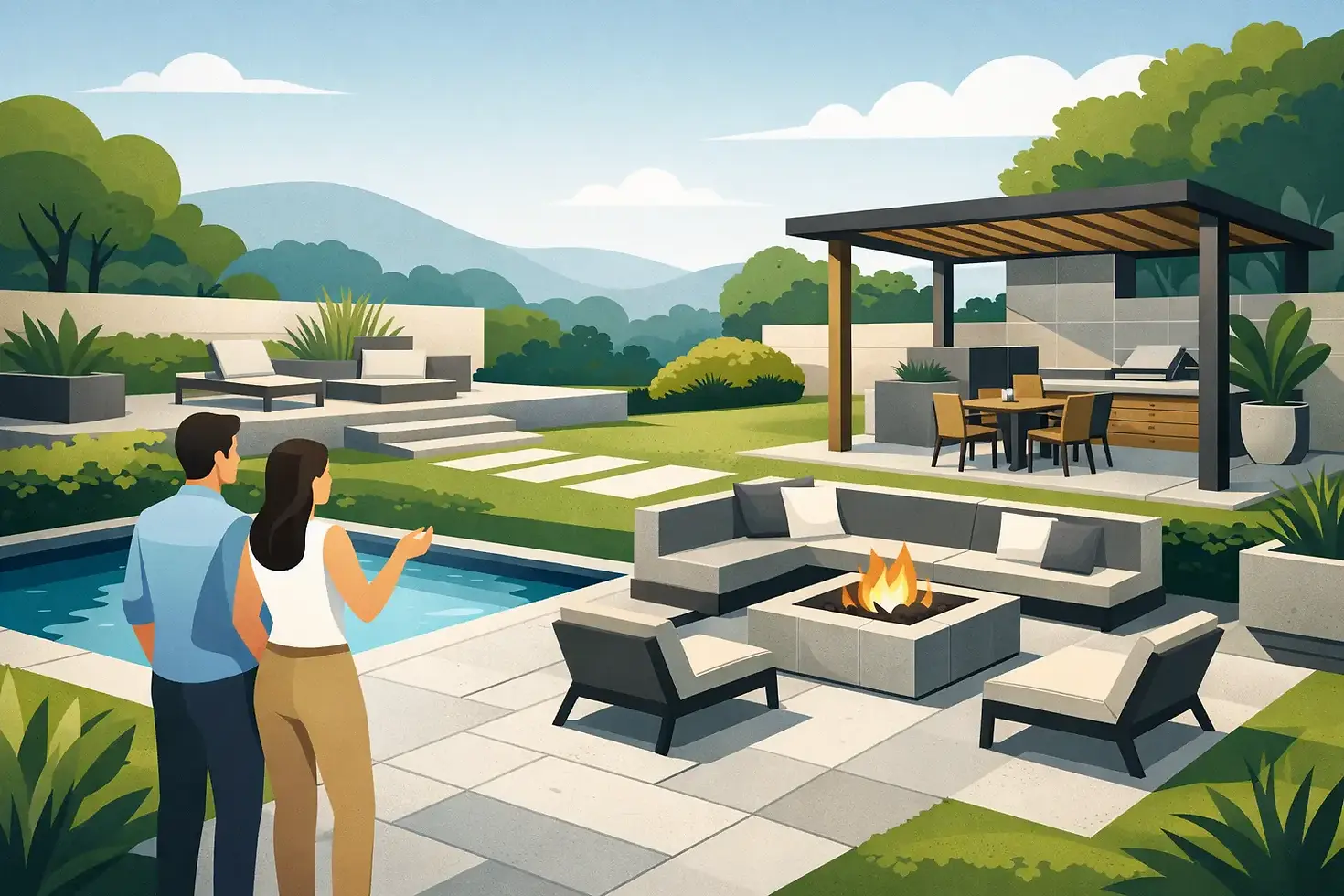
Transform Your Backyard With Concrete
- uptopcontracts
- Apr 22
- 6 min read
A backyard usually starts to feel "finished" right around the time the problems become obvious. The grass wears down where people actually walk. Patio stones shift. Water sits near the house after a heavy rain. What looked good for one season starts asking for constant upkeep. If you want to transform your backyard, the smartest place to start is not with decor. It is with the hard surface that sets how the space works every day.
That is where concrete makes a practical difference. A well-planned concrete patio, walkway, pad, or set of steps does more than clean up the look of a yard. It improves access, reduces maintenance, helps manage drainage, and gives the rest of the space a solid foundation. For homeowners who want lasting value instead of another short-term backyard fix, that matters.
What it really means to transform your backyard
A real backyard upgrade is not just about adding something new. It is about correcting the parts of the space that are inconvenient, unsafe, or underused.
For some properties, that means replacing a patchy, muddy seating area with a proper concrete patio. For others, it means creating a clear walkway to a side gate, basement entrance, garage, or pool area. In many cases, it means dealing with grade and drainage at the same time, because a beautiful backyard surface will not stay beautiful for long if water is constantly working against it.
This is where many homeowners lose money. They spend on furniture, planters, lighting, and landscaping before fixing the structure underneath. Then the patio settles, the access is awkward, or the water starts pooling along the foundation. The result is a backyard that looks improved but still does not function well.
Why concrete is often the best place to start
Concrete is not the right answer for every square foot of a yard, but it is often the best starting point because it handles the jobs that softscape and light finishes cannot.
It creates durable, level surfaces for dining areas, barbecue zones, hot tub pads, shed bases, and pathways. It gives you a cleaner transition between the house and the yard. It also stands up well to freeze-thaw conditions when it is installed properly with the right base preparation, grading, and finishing.
There are trade-offs, and it is better to say that plainly. Concrete is not maintenance-free. It can crack over time because all concrete cracks to some degree. Decorative finishes may require more care than a standard broom finish. Larger pours also require thoughtful planning around joints, slope, and drainage. But compared with surfaces that shift, loosen, or need regular resetting, concrete is usually the more stable long-term investment.
The backyard upgrades that make the biggest impact
The most effective way to transform your backyard is to focus on the surfaces that get used the most.
Patio areas
A backyard patio is often the center of the space. It is where people eat, gather, and move in and out of the home. If your current patio is uneven, undersized, or made from materials that constantly move, replacing it with concrete can immediately improve the way the yard feels.
The size matters as much as the material. A patio that only fits two chairs may not solve the problem if you actually need room for a table, grill, and foot traffic. Good planning means thinking about how people will move through the area, where doors open, and whether the surface should connect to other backyard features.
Walkways and side-yard access
Backyards often feel unfinished because the path to them feels unfinished. A narrow dirt track along the side of the house becomes muddy. Old pavers separate. Guests step off the edge because the route is not clear.
A proper concrete walkway gives the yard structure. It also improves safety, especially in wet weather or during cold months. For homes with basement entrances, rear garage access, or detached structures, a stable walkway is not just a visual upgrade. It becomes part of how the property functions day to day.
Steps and grade transitions
Many yards are not flat, and pretending they are usually creates problems. If there is a drop from the back door to the yard, or a slope toward a lower section of the property, concrete steps can make the space safer and easier to use.
This is one area where shortcuts show up fast. Step height, depth, drainage, and edge stability all matter. A step that looks acceptable but feels awkward underfoot can become a hazard. That is why these details should be treated as construction work, not just landscaping.
Pads for sheds, bins, and equipment
Not every backyard improvement has to be decorative. Sometimes the most useful upgrade is a concrete pad for a shed, garbage enclosure, air conditioning unit, or outdoor storage area.
These are the parts of a yard that often get neglected until they become messy or unstable. A proper pad keeps structures level, reduces mud, and gives the whole yard a cleaner, more organized layout.
How concrete changes the maintenance picture
One reason homeowners choose concrete is simple: they are tired of redoing the same backyard problems.
Grass does not hold up well in high-traffic zones. Loose stones shift. Wood can rot or warp over time. Gravel migrates into surrounding beds and lawns. A concrete surface reduces those recurring issues and makes the backyard easier to maintain.
That said, low maintenance does not mean no maintenance. Concrete should be kept clean, and in some cases sealed, depending on the finish and exposure. Snow removal should be done with care. De-icing products can also affect surface condition over time, especially on newer concrete. Honest contractors should explain that up front instead of selling the idea that concrete will never need attention.
Drainage is part of the design, not an extra
If you are planning to transform your backyard, drainage should be part of the conversation from the start.
A patio or walkway that looks level to the eye still needs controlled slope so water moves away from the house and off the surface properly. Poor drainage can lead to pooling, icy conditions, erosion around edges, and moisture issues near the foundation. It can also shorten the life of the installation.
This is one of the biggest differences between cosmetic work and professional site work. A backyard surface is not just there to look clean. It has to perform during heavy rain, spring thaw, and daily use. In areas like Toronto, Mississauga, Oakville, and Burlington, where weather swings can be hard on exterior surfaces, that matters more than people think.
Choosing the right finish for your backyard
Not every backyard needs the same type of concrete finish. The best option depends on how you use the space, how much maintenance you want, and what kind of look fits the property.
A standard broom finish is often the most practical choice for patios, walkways, and steps because it provides traction and keeps the focus on durability. Exposed aggregate can add visual texture and a more decorative feel, but it may not be the right fit for every budget or design. Larger decorative plans should also be weighed against long-term maintenance expectations.
The key is to choose a finish that matches the job. A backyard used by kids, pets, and regular foot traffic may benefit more from a straightforward, durable surface than from a more delicate decorative treatment.
What to expect from a trustworthy contractor
If a contractor promises a perfect backyard surface with no cracking, no maintenance, and no limitations, that should raise questions.
Concrete work should come with clear communication about preparation, thickness, reinforcement where appropriate, drainage, finish options, curing, and realistic performance. Homeowners should also expect proof of past work, insurance coverage, and a quote that explains what is included.
A trustworthy contractor is not just selling a backyard upgrade. They are helping you understand what will work on your property, what may not be necessary, and where the real value is. That approach tends to save money and frustration over time.
For a lot of homeowners, the goal is not to create a magazine backyard. It is to create a space that feels clean, usable, safe, and worth spending time in. When the concrete work is planned properly, everything else gets easier - from landscaping choices to furniture layout to everyday maintenance.
If your backyard has been stuck in the cycle of patch, repair, and redo, a solid surface may be the change that finally makes the space work the way it should.


Comments