


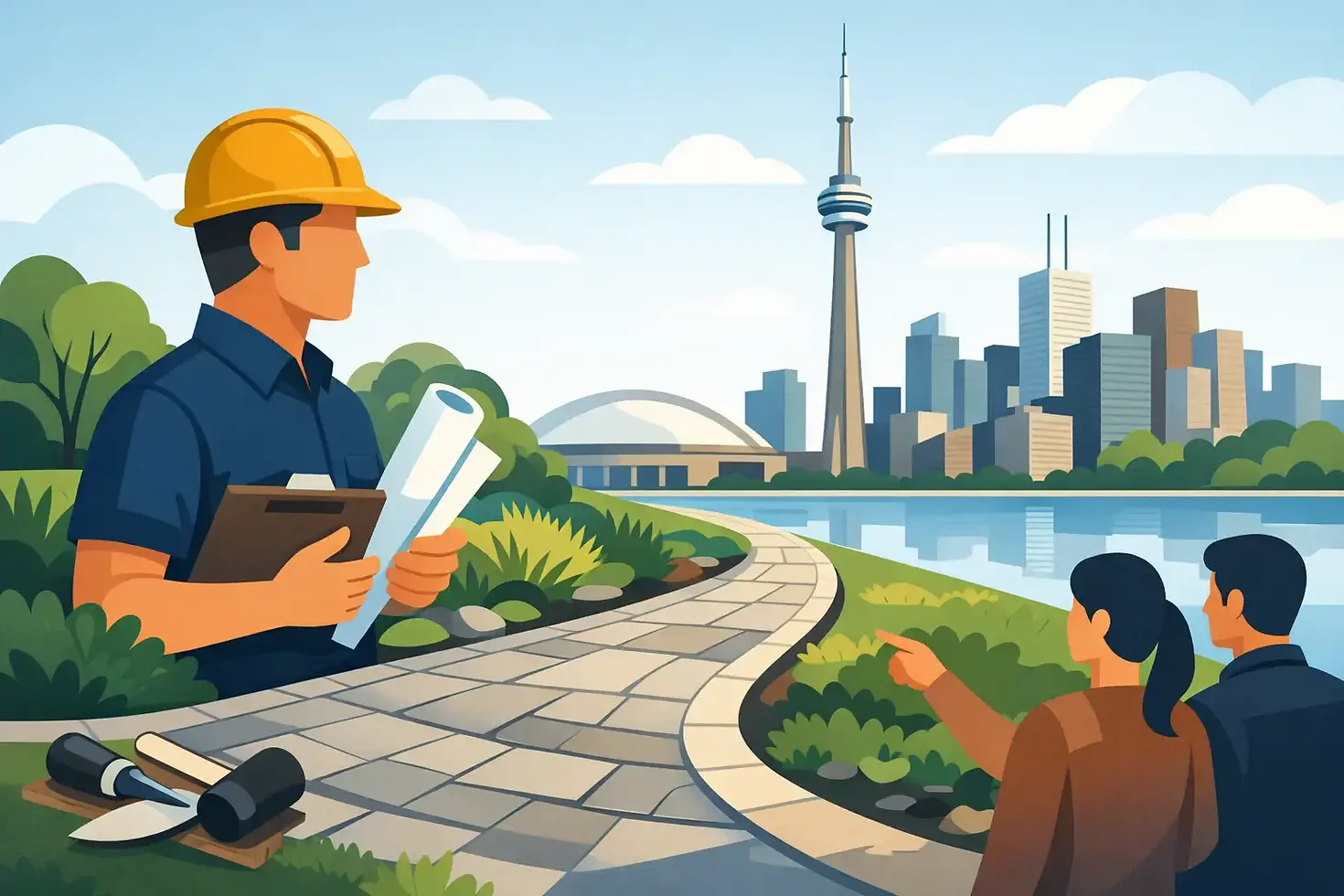
Toronto Walkway Contractor: What to Look For
- uptopcontracts
- Apr 23
- 6 min read
A walkway usually starts as a small project on paper. Then winter passes, the surface shifts, water starts pooling near the house, and suddenly that "small" project affects safety, curb appeal, and how the whole property drains. That is why choosing the right Toronto walkway contractor matters more than most property owners expect.
A good walkway is not just a strip of concrete from point A to point B. It has to suit the grade of the property, shed water properly, handle freeze-thaw cycles, and stay practical for daily use. If the design is off or the base work is rushed, even a new walkway can start showing problems earlier than it should.
Why a walkway job is more technical than it looks
From the street, most walkways look simple. In practice, the quality of the finished job depends heavily on what happens below the surface. Excavation depth, base preparation, compaction, slope, reinforcement decisions, and finishing technique all affect long-term performance.
This is where many low-price quotes create problems. A contractor can make a number look attractive by cutting excavation short, using less base material, skipping careful grading, or rushing the finish. The walkway may look fine on day one. A year or two later, you may be looking at settlement, cracks that open wider, or water draining toward the foundation instead of away from it.
For homeowners, that means repairs you did not budget for. For property managers and commercial owners, it can also mean a slip hazard or a liability issue.
What a Toronto walkway contractor should evaluate first
A reliable Toronto walkway contractor should ask more questions than you expect. That is usually a good sign. Walkways need to fit the actual conditions of the site, not just the dimensions on a sketch.
Grade and drainage
Drainage is one of the first things that should be reviewed. A walkway should help direct water away from structures, not trap it along the edge of the house or near steps and entrances. If a property already has drainage issues, the walkway design has to work with that reality.
Sometimes the right solution is straightforward. Sometimes it requires adjusting elevations, changing the path, or coordinating with nearby steps, curbs, or a basement entrance. A contractor who ignores drainage to keep the quote simple is not doing the customer a favor.
Base preparation
This is one of the least visible parts of the project and one of the most important. Proper excavation and compacted base material support the slab and reduce the chance of premature movement. No contractor can promise that concrete will never crack, because concrete can crack. What they can do is build the walkway correctly so it has a better chance of performing well over time.
Use and traffic
Not every walkway has the same job. A front entrance path for a single-family home has different demands than a side access walkway used for garbage bins, delivery traffic, or frequent tenant use. Width, thickness, access points, and transitions all matter.
Commercial and multi-unit properties may also need closer attention to accessibility, trip reduction, and smoother transitions at entry points.
Materials and finish choices
Concrete is often the practical choice for walkways because it is durable, clean-looking, and adaptable to different property styles. But even within concrete work, there are decisions that affect both appearance and function.
A broom finish is popular because it offers traction and a simple look that works on most homes and commercial properties. Exposed aggregate can add texture and visual interest, but it may not fit every budget or every site condition. Decorative finishes can improve curb appeal, but they should never come at the expense of safe footing and proper drainage.
The right contractor should explain the trade-offs clearly. Some finishes look sharper on day one but require more maintenance or show wear differently over time. Others are more forgiving and practical for properties that see heavier use.
How to compare walkway estimates honestly
Price matters. It should. But walkway estimates are only useful when you know what is actually included.
A lower quote is not automatically a better deal, and a higher quote is not automatically better workmanship. The real question is whether the scope is clear. Does the estimate outline demolition if needed, excavation, base preparation, forming, pouring, finishing, cleanup, and disposal? Does it mention thickness, dimensions, and how water flow will be handled? If those details are missing, the number may be incomplete.
This is also where communication tells you a lot. A dependable contractor should be able to explain why the price is what it is without hiding behind vague language. If someone leans on unrealistic guarantees or avoids direct answers about cracking, curing, or site limitations, that is usually a red flag.
What honesty looks like in concrete work
The best contractors do not sell fantasy. They explain what concrete can do well and where the limits are.
For example, no honest contractor should tell you exterior concrete is immune to cracking. Control joints, proper base work, and solid installation practices help manage movement, but concrete is still a rigid material exposed to weather, temperature swings, and soil conditions. The right conversation is about reducing risk and building properly, not pretending nature does not apply.
The same goes for timing. Weather, access, curing conditions, and surrounding structures all affect scheduling. A contractor who gives you a polished sales pitch but no realistic discussion of these factors is often easier to hire than to work with.
That is one reason many property owners prefer experienced, insured contractors with a track record they can show. Real project photos, clear estimates, WSIB coverage, liability insurance, and consistent communication say more than flashy claims ever will.
Walkways and property value
A well-built walkway improves more than appearance. It shapes how people approach and use the property.
At a home, it can make the entrance feel finished, cleaner, and safer in wet or icy conditions. It can also help connect a driveway, steps, backyard access point, or basement entrance in a way that feels intentional instead of pieced together over time.
On commercial properties, the value is even more practical. A stable, properly graded walkway can reduce trip hazards, improve access, and support a more professional appearance for tenants, visitors, and customers. For managers who have to think about maintenance and liability, that matters.
When replacement makes more sense than repair
Some walkway issues can be patched. Many cannot be fixed well enough with a cosmetic repair.
If the slab has major settlement, recurring drainage problems, widespread cracking, or unsafe height differences between sections, replacement is often the smarter investment. Surface patching may improve the look for a short time, but it usually does not solve the underlying issue. In some cases, it can even make the finish more uneven or obvious.
A trustworthy contractor should tell you when repair is reasonable and when replacement is the better path. That kind of advice may not always produce the cheapest answer, but it usually prevents repeat spending.
Choosing a contractor without guesswork
If you are comparing companies, focus on proof and clarity. Look for experience with residential and commercial flatwork, not just general home improvement claims. Ask whether the company is insured, whether it handles site prep thoroughly, and whether it can show completed walkway projects similar to yours.
Pay attention to how they talk about the job. Do they explain slope, base work, finish options, and realistic expectations in plain language? Do they answer questions directly? Do they make it easy to understand what is included in the estimate?
That approach tends to separate dependable contractors from aggressive sales operations. A serious contractor wants you to understand the project before you sign anything.
For property owners in Toronto and nearby areas, that local experience matters too. Freeze-thaw weather, changing soil conditions, and the need for durable exterior surfaces are not side issues here. They are central to whether a walkway keeps performing year after year.
UptopContractor takes that practical approach because it is better for the customer and better for the work. The goal is not to promise perfection. The goal is to install a walkway that is properly planned, professionally built, and suited to the property it serves.
If you are looking at a new walkway, treat it like what it is - a long-term exterior improvement that affects safety, drainage, and first impressions every day. The right contractor will help you get those details right before the concrete is ever poured.


Comments