


Concrete: What Property Owners Should Know
- uptopcontracts
- Apr 16
- 4 min read
Bad concrete is expensive twice. First when you pay for it, and again when it starts cracking, sinking, or holding water where it should not. Concrete is one of the best long-term exterior upgrades you can make, but only when the base, placement, finishing, and drainage are handled properly from the start.
For homeowners and property managers, that matters more than the sales pitch. A new driveway, walkway, set of steps, or commercial pad can improve curb appeal, safety, and property value. It can also become a problem fast if the installer cuts corners on excavation, reinforcement, slope, or curing. The surface may look clean on day one and still fail early.
What makes concrete last
Concrete strength is not just about the mix. The ground underneath it matters just as much. If the base is soft, poorly compacted, or uneven, the slab can settle and crack no matter how good the top finish looks.
That is why proper excavation and compaction are not optional steps. In freeze-thaw climates, water is the enemy. When water gets under or around the slab and freezes, it expands and puts stress on the concrete. Over time, that leads to movement, surface damage, and separation at joints or edges.
Thickness matters too, but only in context. A thicker slab can help in high-load areas, but thickness alone does not fix a weak base or poor drainage. For residential driveways, walkways, basement entrances, and steps, the right approach depends on use, soil conditions, grade, and exposure.
Concrete cracking: normal vs. avoidable
A lot of customers ask the same question: will concrete crack? The honest answer is yes, concrete can crack. Anyone promising otherwise is not being straight with you.
What matters is how the job is designed and installed to control cracking. Control joints help guide where cracking may occur. Proper water management reduces movement under the slab. Good finishing and curing practices also lower the risk of premature surface issues.
Some cracks are cosmetic hairlines. Others point to deeper problems like settlement, poor sub-base preparation, or weak edges. The difference is important. A small surface crack does not automatically mean the whole job failed. But widespread cracking, sinking sections, or trip hazards usually mean something was missed during installation.
Drainage is not a small detail
One of the biggest reasons exterior concrete underperforms is poor drainage. If water sits on a driveway, runs toward a foundation, or collects at the bottom of steps, the problem is bigger than appearance.
Good concrete work should account for slope, runoff, surrounding grades, and nearby structures. That is especially important around garage floors, basement entrances, walkways, and commercial entrances where standing water quickly becomes a safety issue. In winter, that same water turns into ice and increases slip risk.
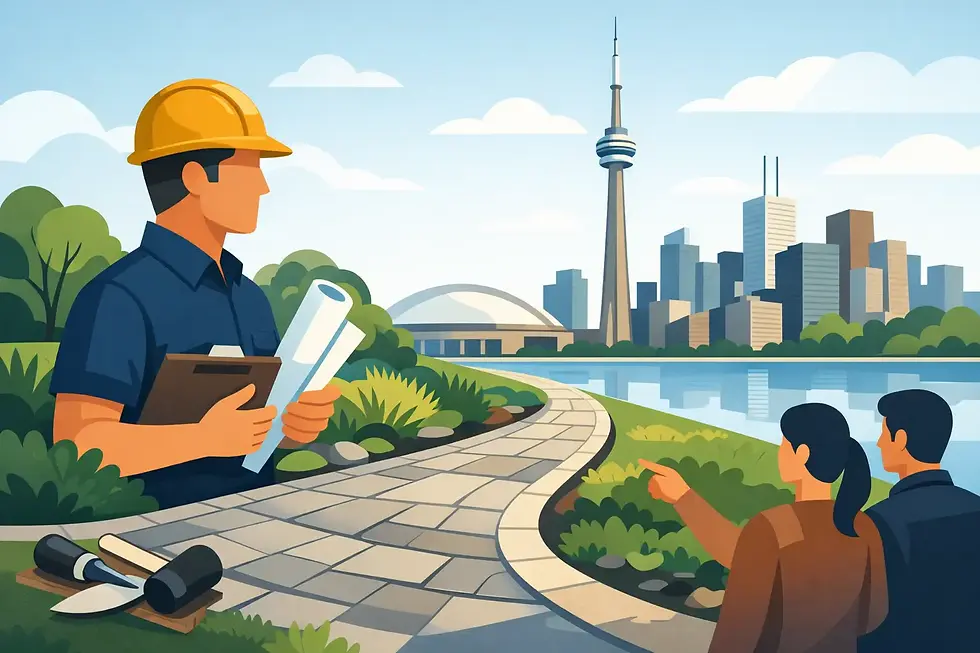
In places like Toronto and across the GTA, changing temperatures put extra pressure on exterior surfaces. A slab that sheds water properly has a much better chance of holding up over time.
Residential and commercial needs are different
Not every concrete project should be treated the same. A backyard pad has different demands than a driveway. A plaza sidewalk or curb has different liability concerns than front entry steps at a house.
Residential customers usually focus on appearance, durability, and clean access around the home. Commercial property owners and managers often need to think about pedestrian safety, accessibility, edge stability, and how the surface will handle repeated traffic. That is why a good estimate should not be one-size-fits-all.
A trustworthy contractor will explain what is being installed, why that method suits the site, and where the limits are. That includes being honest about maintenance, winter wear, and what concrete can and cannot guarantee over time.
What to ask before hiring a concrete contractor
Price matters, but the cheapest quote often leaves out the details that protect the job. If two estimates are far apart, ask what is included in excavation, base preparation, thickness, reinforcement, forming, cleanup, and disposal. Those details change the real value of the project.
You should also ask whether the contractor is insured, covered for worker safety, and able to show past work. Real experience shows up in the small things - straight form lines, proper pitch, clean finishing, and jobs that still look solid after seasons of use.
At UptopContractor, the approach is simple: explain the job clearly, give realistic expectations, and install concrete that is built for actual use, not just a nice photo on completion day.
When concrete is worth the investment
Concrete is usually worth it when you need a durable, low-maintenance surface that improves access and holds up better than short-term patchwork solutions. It is a strong option for driveways, walkways, steps, basement entrances, curbs, and pads where structure and safety matter.
Still, not every issue calls for replacement. Sometimes a smaller repair makes sense. Sometimes full replacement is the better financial choice because the existing slab has underlying movement or drainage problems that patching will not solve. A contractor who is worth hiring should be willing to tell you the difference.
If you are planning exterior work, the best first step is not chasing the lowest number. It is making sure the concrete is being designed and installed for the way your property actually functions, season after season.

Comments